

How We Coach
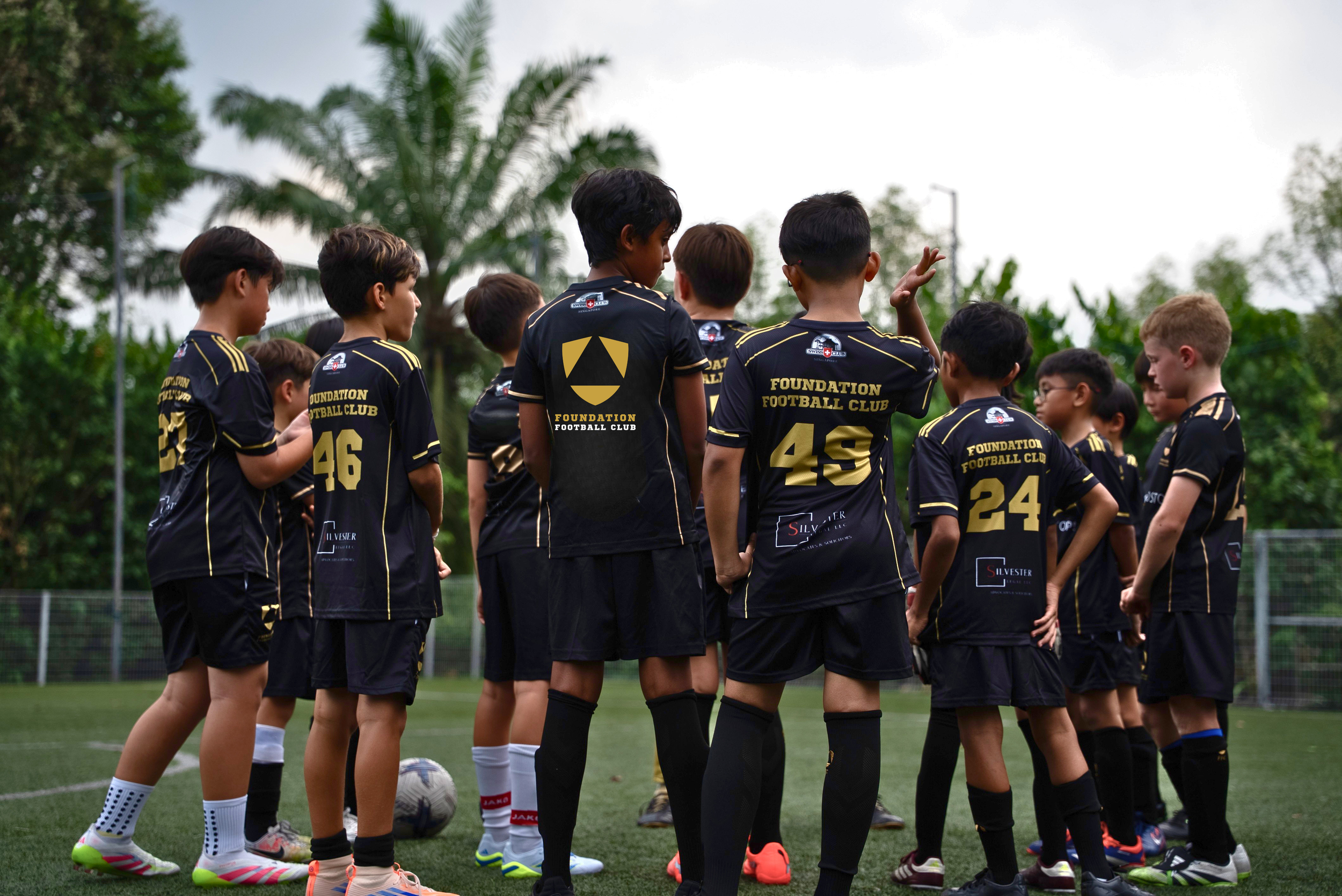
At Foundation Football, every session is built around one idea: Fun through Fundamentals. Training is enjoyable, structured, and purposeful — anchored by ball mastery, game awareness, decision-making, and small-sided play. The goal is always the same: build confidence, develop technique, and instil a love for the game.
Our approach is skill-led, not results-led. We prioritise comfort on the ball, technical competence, and smart decision-making. At every stage, football nurtures values that matter beyond the pitch — from courage and enjoyment in the early years, to responsibility and accountability as players grow.

Coaching Pillars
Every session includes:
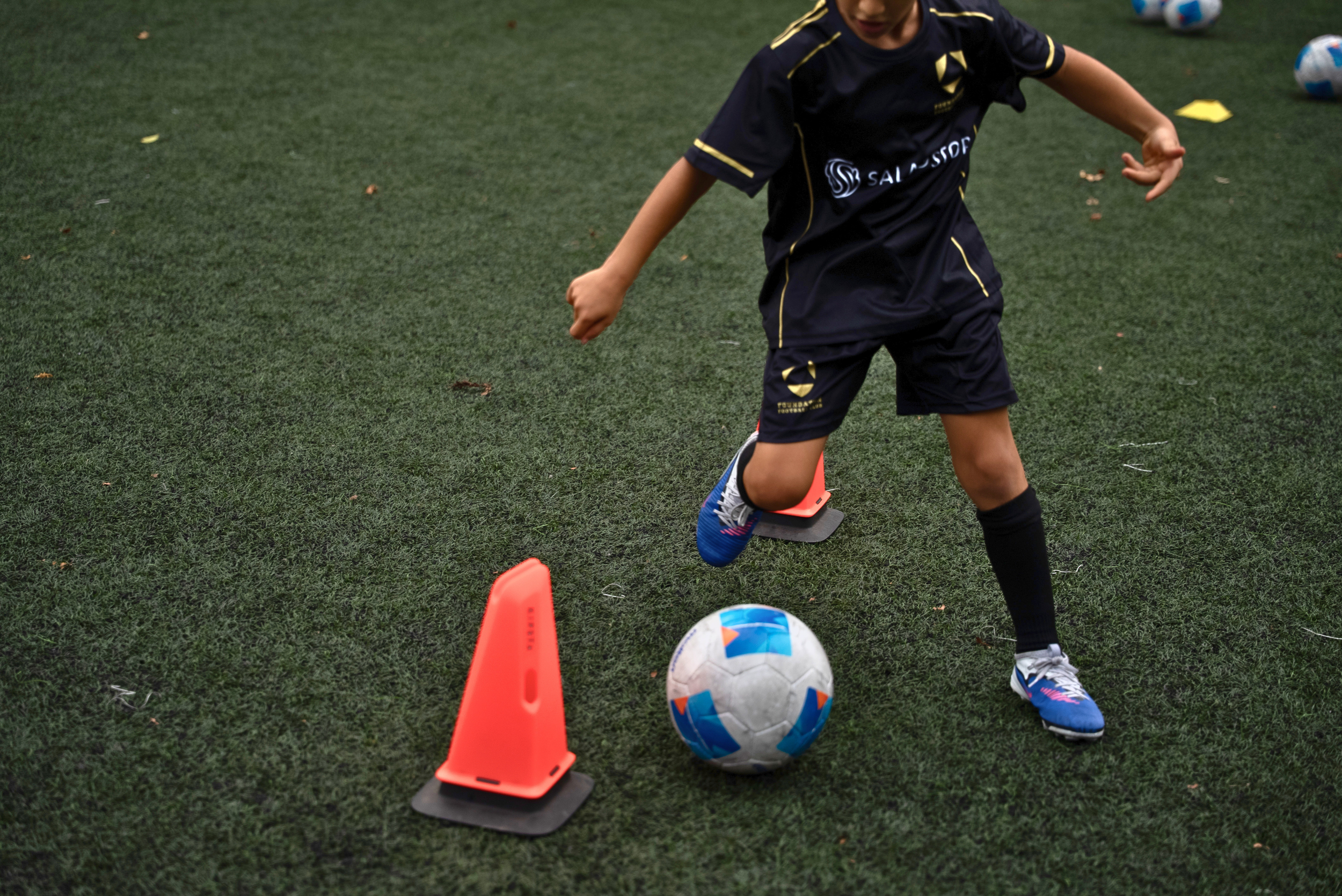
Ball Mastery
Game Awareness
Decision Making
Play
Key Values
3-6 yrs:
Confidence
Enjoyment
Courage
7-9 yrs:
Effort
Teamwork
Resilience
10-12 yrs:
Respect
Responsibility
Accountability
Player Development
Framework
Our development priorities, in order:
Love for the game
Comfort with the ball
Technical competence
Decision-making
Game understanding
Development Stages
Every player progresses through the same stages, regardless of age.
Stage 1:
Movement & Familiarity
Explore movement with and without the ball

Develop balance, coordination, agility
Ball treated as a friendly object
Stage 2:
Control & Coordination
Basic ball manipulation
Begin controlling the ball with intent
Stage 3:
Ball Mastery (Unopposed)
Comfort using both feet
Repetition of core techniques
Emphasis on clean execution
Build confidence and rhythm
Stage 4:
Ball Mastery (Opposed)
Introduce pressure
Shielding, turning, protecting the ball
Maintain technique under stress
Stage 5:
Decision Making (Football IQ)
Recognise space, teammates, opponents
Choose when to dribble, pass, shoot
Mistakes encouraged as part of learning
Stage 6:
Game Execution
Apply skills in realistic game scenarios
Speed of play increases
Tactical awareness introduced naturally
Age Group Curriculum
We organise players by age groups, but development is skill-led rather than results-led.
Ages 3-4:
Discovery Phase
Create positive emotional experiences with football.
Key Characteristics:
Learning through imitation and play
Short attention spans
No fear of failure
Technical Focus:
Stopping the ball
Running with the ball
Kicking the ball
Coaching Guidelines:
No technical overload
Changing direction
Minimal correction
High energy, high praise
Demonstrate more, talk less
Session Structure:
Free play with balls
Simple games (cones, goals, animals, colours)
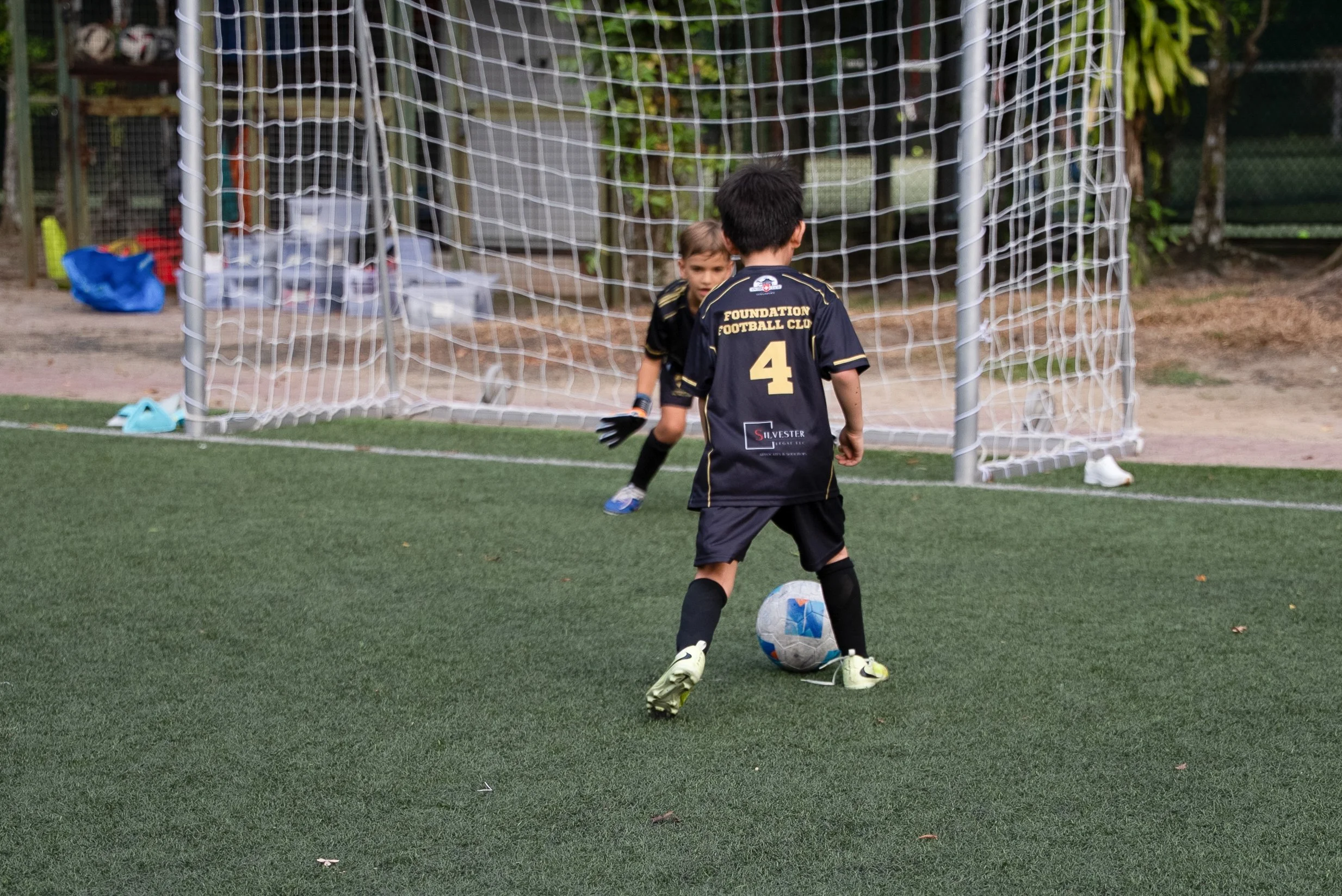
1v0 shooting, sometimes 1v1
No formal matches, small sided games
Ages 5-6:
Foundation Phase
Build comfort and confidence with the ball.
Game Concepts:
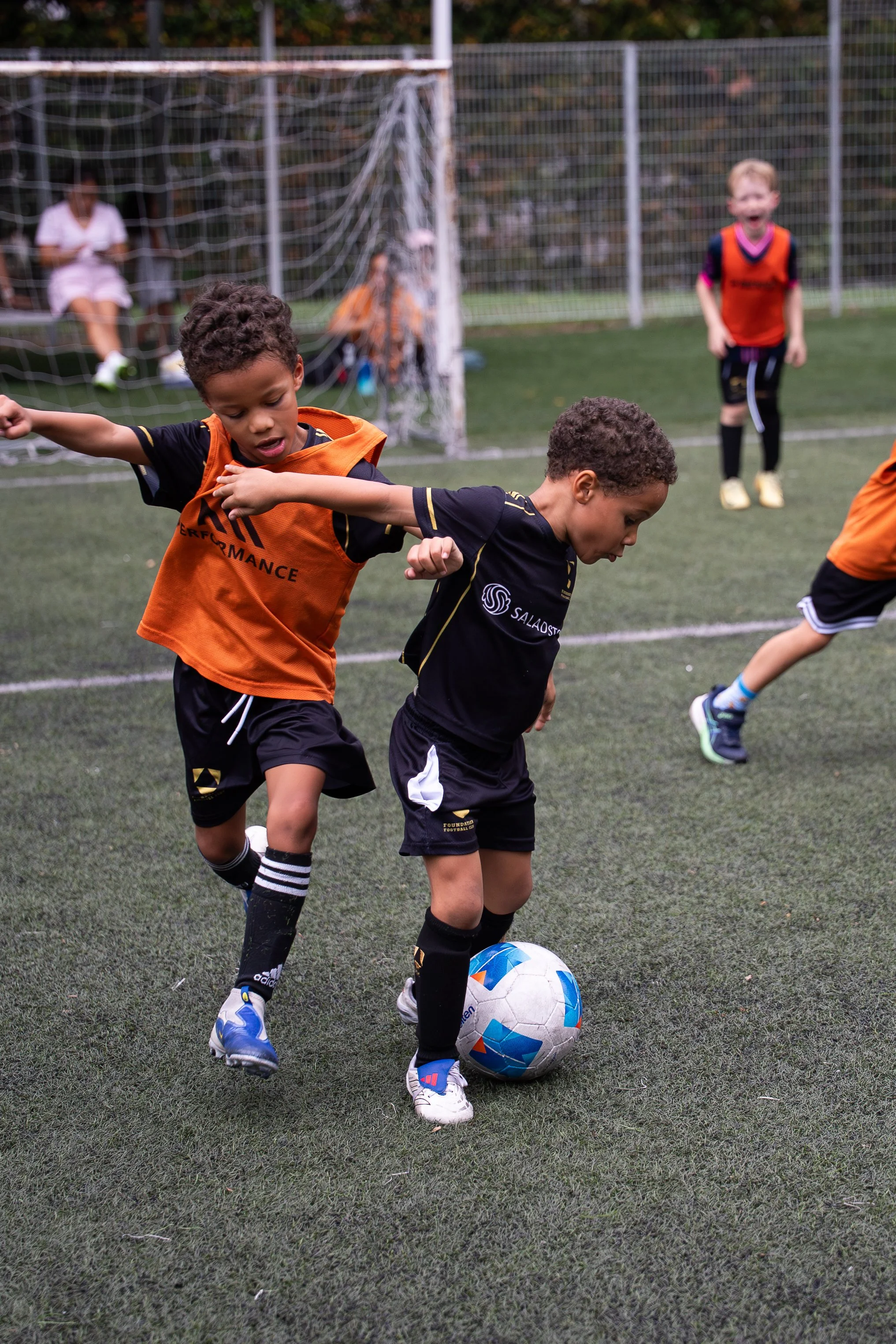
Protect the ball
Beat an opponent
Shoot when close to goal
Technical Focus:
Outside foot dribbling
Inside foot dribbling
Stop–start control
Simple turns (drag back, pull back)
Basic shooting technique
Coaching Guidelines:
Encourage experimentation
Introduce both feet naturally
Avoid rigid positioning
Allow players to solve problems
Session Structure:
Ball mastery games
1v1 activities
Small-sided games (2v2 / 3v3)
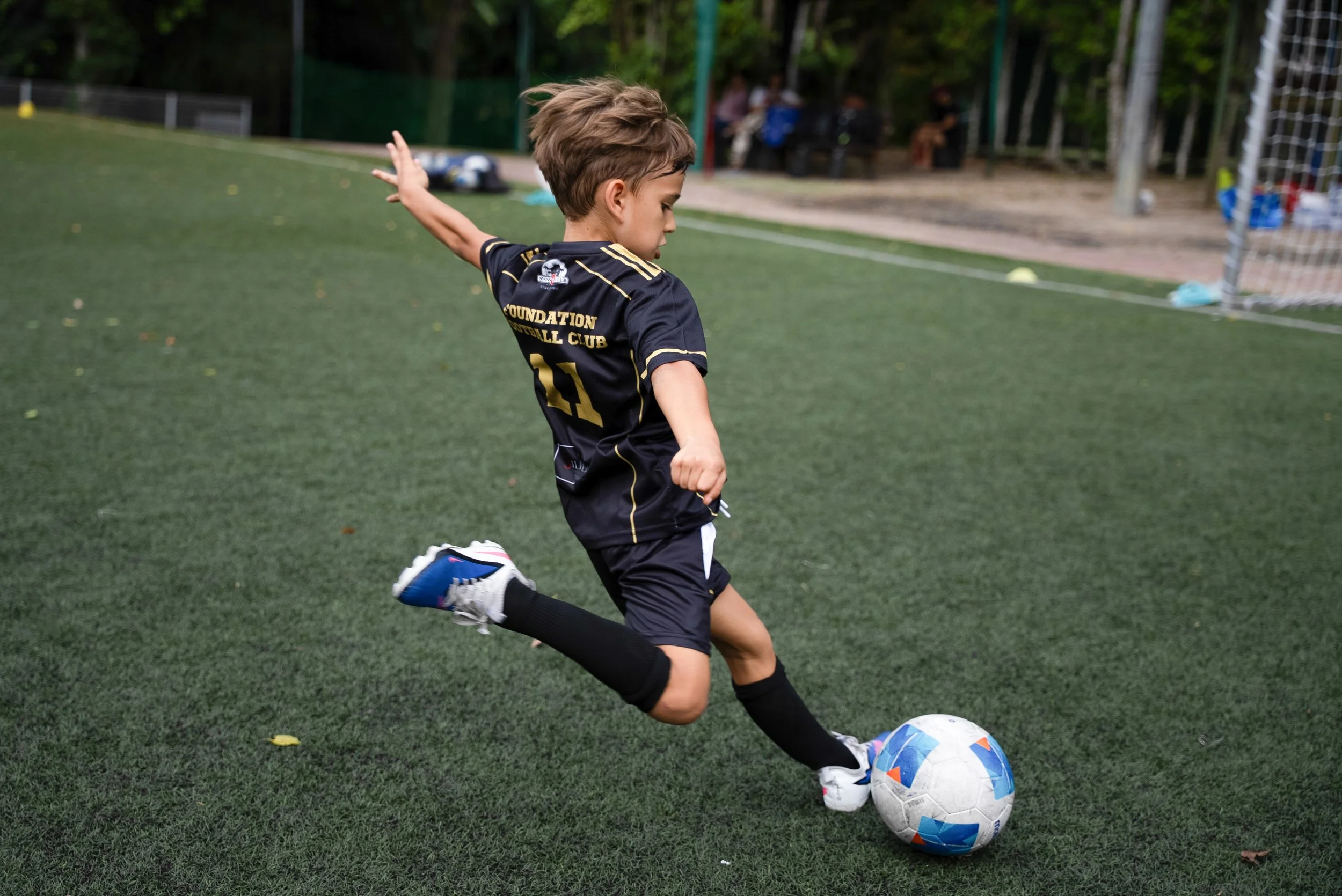
Ages 7-9:
Development Phase
Develop strong ball mastery and individual skill.
Game Concepts:
Recognising space
1v1 attacking and defending
Basic combination play
Support and movement off the ball
Turning under pressure
Technical Focus:
First touch control
Shielding the ball
Passing and receiving
Dribbling with changes of direction & speed
Coaching Guidelines:
Correct technique when appropriate
Use guided questions (“What could you do there?”)
Mistakes are learning moments
Keep games realistic and competitive
Session Structure:
Ball mastery blocks
Opposed practices
Small-sided games (3v3 / 4v4)
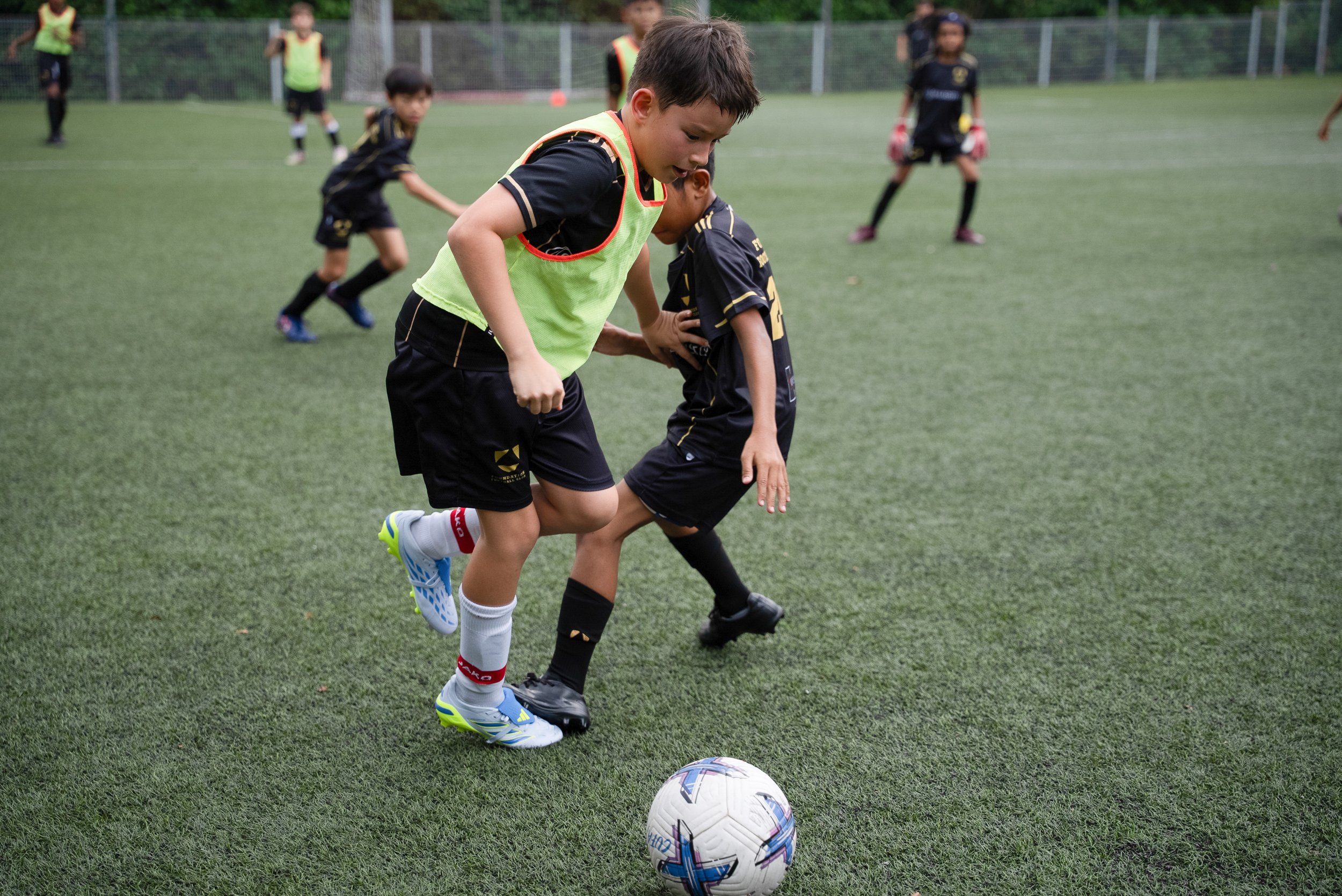
Ages 10-12:
Performance Foundation Phase
Execute skills under pressure and make better decisions.
Game Concepts:
Creating and exploiting space
Decision-making (dribble vs pass)
Attacking and defending principles
Transition moments
Receiving across the body
Technical Focus:
First touch into space
Turning under pressure
Passing on the move
Finishing techniques
Coaching Guidelines:
Demand quality and intensity
Challenge players mentally and physically
Introduce basic tactical concepts without rigidity
Maintain enjoyment while raising standards
Session Structure:
Technical activation
Game-realistic practices
Conditioned small-sided games